equa-logo

Hagastaden Residential Apartments - Miljöbyggnad


hagastaden 800

Project Information:

Type: Residential, code compliance, labels and standards (certification)
Consultant: EQUA
Client: Einar Mattsson
Summary: Residential apartment building certified according to Swedish green building system Miljöbyggnad, using dedicated IDA ICE extension. Both apartments and systems were modified as a result of the simulation model.


Challenge

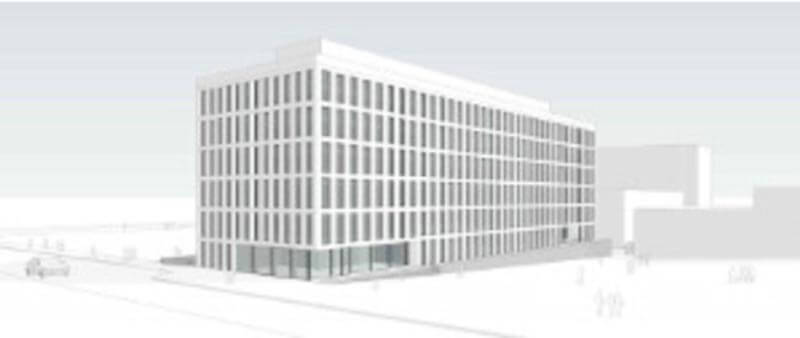
The project involved construction of a large multi-storey residential building in Stockholm, Sweden. The building was to be certified according to the green building system Miljöbyggnad which rates the building in fifteen different aspects (indicators). Example system requirements included energy use, heating demand, thermal comfort, maximum solar load and daylight. Finding, for example, the optimum glazing sizes and types placed a major challenge on the project, and previous approaches included the use of several types of software, resulting in an extremely time-consuming process.

Solution

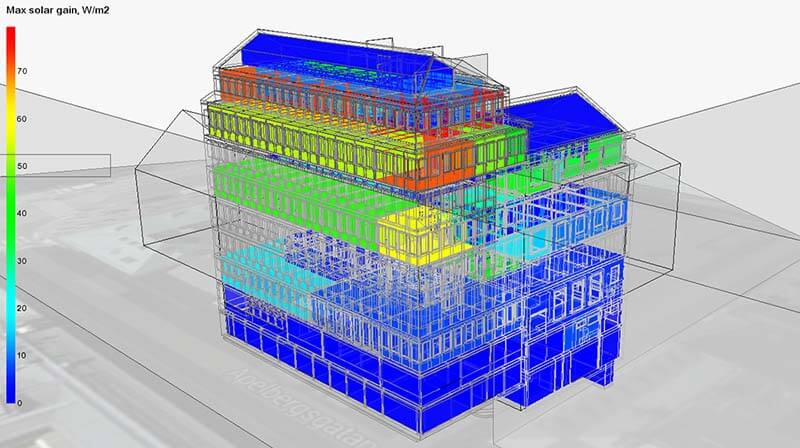
The entire building was modelled in IDA ICE on a room-by-room resolution. Six of the indicators were evaluated based on the same simulation model. The IDA ICE extension module Miljöbyggnad was used to simplify the work process. This extension has custom–designed simulation setups for the six indicators, meaning that the model is automatically adjusted and reports are generated to fit with the requirements of the Miljöbyggnad green building system.
 

Result

The apartments and systems of the building complex were modified based on the result from the simulation model. The requirements for the indicators of Miljöbyggnad were met to ensure occupants health and comfort, as well as a low energy consumption.

hagastaden result 800Daylight factors are simulated based on the geometry of the IDA ICE model and the Radiance simulation engine




logo equa           einar matsson
 

Print Email

Exhaust air heat pump for residential


3
Project facts

Type: Residential, Detailed studies
Consultant: EQUA
Summary: Creating an advanced plant models in order to size an exhaust air heat pump in a residential building, which is connected to a district heating system.


Challenge

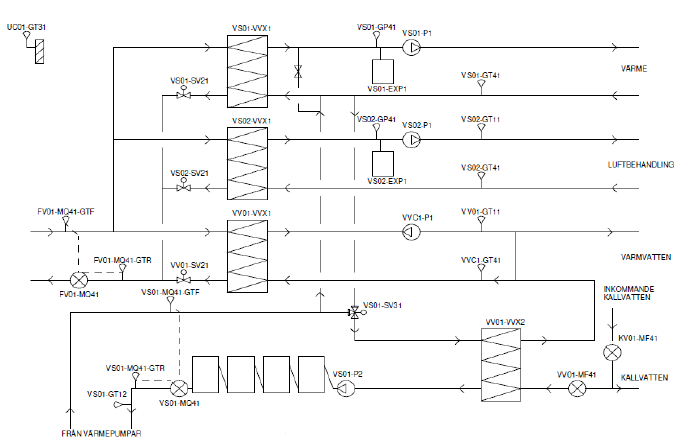
In IDA ICE we have the possibility to create more advanced plant models by using ESBO Plant. By using ESBO plant it is possible to automatically create plants that for example use the exhaust air as a source for a heat pump. This can be useful when you need a rough estimation of the savings that can be achieved. However, a plant made in this way does not cover all aspects of a real plant design and will not simulate the true behavior of a real system layout. Luckily this is not a big problem. When using IDA ICE it is possible to create a plant model that looks like and simulates the real behavior by using the component models of the ESBO plant. In this particular case an exhaust air heat pump that works together with a district heating system was to be created.
exhaust schematic
The schematic of the system to be designed

Solution

The model of an exhaust air heat pump consist of two main parts, the plant and the air handling unit with the exhaust air cooling coil. A normal plant in IDA ICE is unlimited, but when using a detailed plant, all the valves, heat exchanges, heat pump etc. must be properly sized. The sizing data to be put into the model can be reached by clicking the buttons in the top right corner of the model.

resulting plant 800
The resulting plant model in IDA ICE

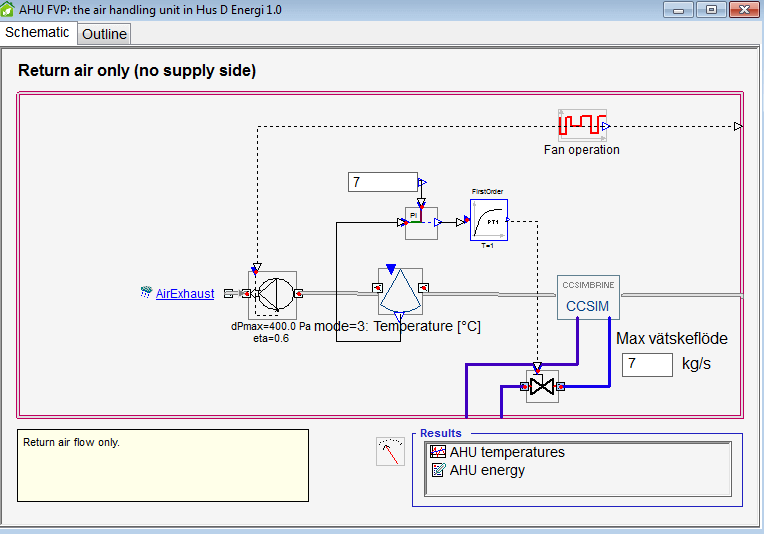
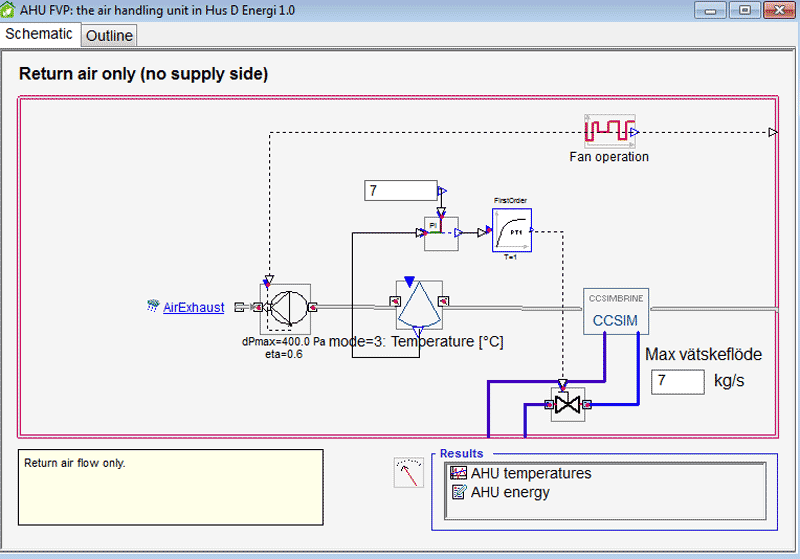
The air handling unit consists of an exhaust fan and a cooling coil. The coil is connected to the plant by using the built in connection between the plant and the cooling coil. A project can consist of multiple air handling units connected.

exhaust air
The Air handling unit connected to the Plant model

The heat pump is controlled to keep the return water temperature at a constant level. To simulate a heat pump with multiple compressors that gradually steps into action it is possible to set the type of control to stepwise. The minimum time for each step can be varied. This will make the simulation quite slow. The model will work better if it is possible to use continuous control.

heat pump
A detailed view of the control of the heat pump. Here two different control algorithms can be selected stepwise or continuous.
 

Result

By using a more detailed simulation model the customer can test the influence of the sizing of the components on the energy usage. Most important is the sizing of the heat pump and the tank connected to it. Also, by using this plant the model gives a correct result of the used power for heating that is required to be within a certain limit according to the Swedish building code.


logo equa
 

Print Email

Free cooling of an office building with boreholes


free cooling 800
Project facts

Type: Office, whole-building studies
Consultant: EQUA, Hans Abicht AG
Client: Roche Diagnostics
Summary: An office building cooled with boreholes. Both borehole fields and ambient air heat exchanger could be reduced significantly in size thanks to the simulation.


Challenge

A new office building with relatively high cooling need (IT services) should be cooled by as much free cooling from boreholes as possible. The heat is provided by a heat pump, taking as much heat as possible from the cooling tanks and the rest from the same borehole field.

free cooling challenge 800
Whole building simulation model

The questions were:

  • How many boreholes are needed in order to cover the cooling need?
  • How should/can the ground be recovered?
  • Is an ambient heat exchanger needed (to either recover the boreholes or to cover extra active cooling)? If yes: What size and do we need a wet heat exchanger or not?


Solution

A model was created with:

  • 129 zones
  • hybrid heating/cooling panels, which are able to precool the concrete ceiling during nights
  • cooling fan coils for the server rooms
  • 2 air handling units, 3 tanks, 1 heat pump, 1 ambient heat exchanger
  • a borehole field with 29 boreholes
  • plant control with 41 controllers

free cooling solution 800
Office and meeting rooms with hybrid heating/cooling panels

The control measures tank temperatures on different heights as well as borehole outlet temperature and ambient air temperature. Depending on these temperature measurements, the system is switched between the following 5 operation points:

  • Simultaneous heating and cooling (heat pump between cooling and heating tank)
  • Free cooling (from boreholes directly to cooling tank)
  • Active heating (from boreholes to heat pump)
  • Active cooling (from ambient air to chiller)
  • Borehole regeneration (from boreholes to ambient air)


plant model 1 small
plant model 2 small
plant model 3 small
plant model 4 small
Plant model with 4 of the 5 operation points


Result

Thanks to the higher planning reliability, the borehole field as well as the ambient air heat exchanger could be significantly reduced in size. The investment costs were reduced by 10 times the costs of the whole simulation service. The created dynamic building model can be reused for fault diagnostics and system optimization during the operation of the building.


free cooling result1 800
free cooling result2 800

Borehole outlet temperatures over 50 years for the system with (above) and without (below) regeneration of the borehole field.


logo equa     logo abicht     logo roche
 

Print Email

Case studies

hagastaden 800
Hagastaden residentials - Miljöbyggnad

Type: Residential, code compliance, labels and standards (certification)
Summary: Residential building certified according to Swedish green building system Miljöbyggnad, using dedicated IDA ICE extension. Both apartments and systems were modified as a result of the simulation model.
Read more

hotel 800
Energy savings in hotel retrofit

Type: Hotel, code compliance, retrofitting
Summary: Retrofit of hotel, where Swedish building code had to be followed, meets tough requirements on energy efficiency.
Read more

free cooling 800

Free cooling of an office building

Type: Office, whole-building studies
Summary: An office building cooled with boreholes. Both borehole fields and ambient air heat exchanger could be reduced significantly in size thanks to the simulation.
Read more

fennia 800
Fennia office building, Helsinki

Type: Office, detailed studies
Summary: Retrofit of office building with high U-values. Ceiling heating/cooling panels, integrated to Sensus-system, were carefully dimensioned and positioned, resulting in good comfort and 25-35% energy savings compared to tradition system.
Read more

evaporative 800
Evaporative cooling of factory envelope

Type: Industrial, detailed studies
Summary: Evaporative cooling study of a factory envelope. A tailor-made extension for IDA ICE was developed and used. Comparison between measurement and simulation showed very good agreement.
Read more

exhaust air 800
Exhaust air heat pump for residentials

Type: Residential, detailed studies
Summary: Creating an advanced plant model in order to size an exhaust air heat pump in a residential building, which is connected to a district heating system.
Read more

floorball arena 800
Slippery floor in a floorball arena

Type: Sport, retrofitting
Summary: Retrofitting of floorball hall prevents slippery floor.
Read more

hagaporten 3 800

Monitoring and verification of the office building Hagaporten 3

Type: Office, whole-building studies
Summary: Certified EU Green Building office lowered energy use from around 100 kWh/m2, yr to below 70 by monitoring and optimizations.
Read more

mall of skandanavian 800

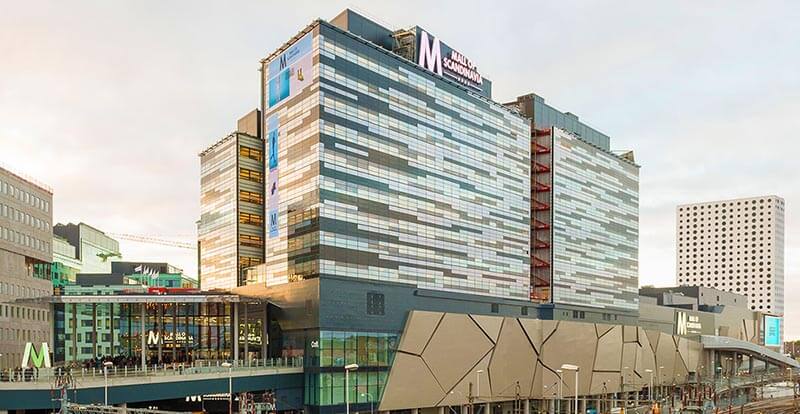
Energy model of Mall of Scandinavia

Type: Whole-building studies, code compliance, labels and standards
Summary: A 200 000 m2 shopping mall with over 1000 zones was simulated, using IFC and parallelization. Both optimization and sizing was achieved, as well verifying the energy use for the Swedish building code and the BREEAM energy credit.
Read more

natural ventilation 800

Natural ventilation in an office building

Type: Office, whole-building studies
Summary: Verification of a natural ventilation concept in a 60 000 m2 office building. Studies on air quality and a coupled comfort, energy and cost investigation was performed.
Read more

1

Model-based planning of ice preparation in a multi-purpose arena

Type: Sport, detailed studies
Summary: A multi-purpose sports arena with a seating capacity of 30 000 spectators needed a strategy for ice preparation. A detailed model was created and calibrated towards measurement.
Read more

1

Hybrid (mechanical and natural) ventilation of a school building

Type: Educational, whole-building studies
Summary: A mechanical and natural ventilation system in a schoolhouse is improved by introduction of a well-designed control system.
Read more

2

Study of a proposed design of an ice rink plant

Type: Sport, detailed studies
Summary: A detailed design proposal for an ice rink plant, where the excess heat is used for heating the building.
Read more


Print Email

University of Jyväskylä


Challenge

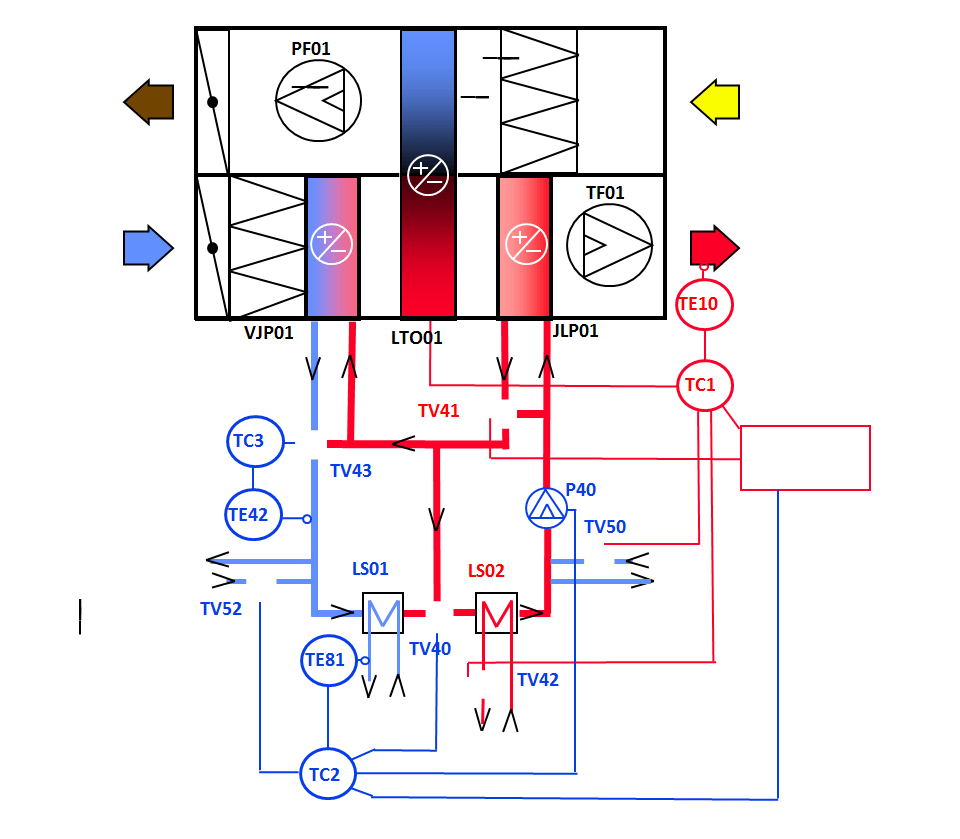
The aim of the study was evaluate low temperature heating and high temp cooling system solution development Sensus, which is developed by Are (one of the biggest HVAC contractors in Finland), in the modern university office building. One of the key elements in the Sensus system is to make cooling power into chilled panels with preheating coil of the ventilation system. And also the automation system is advanced compared to typical solutions. The challenge was to make a fair and reliable comparison between traditional system and Sensus.

(For more information about Sensus system)

The combined heating and cooling radiant panel system with quite large surface area allowed intermediate heating and cooling. Optimal free cooling usage. Heat load usage of datacentre in building service systems. Demand control of artificial light CO2-based demand ventilation Compared to traditional system Sensus system gave 15 % computational energy savings in heating (wo DHW) 28 % computational energy savings in cooling electrical energy


Solution

The combined heating and cooling radiant panel system with quite large surface area allowed intermediate heating and cooling. Optimal free cooling usage. Heat load usage of datacentre in building service systems. Demand control of artificial light CO2-based demand ventilation.


Result

Compared to traditional system Sensus system gave:

  • 15 % computational energy savings in heating (wo DHW)
  • 28 % computational energy savings in cooling electrical energy


Sector
  • Office
Categories
  • Whole-building studies
Features
  • Control systems
  • Cooling and heating
  • Customized designed HVAC systems
  • System and plant sizing
  • Ventilation


02a

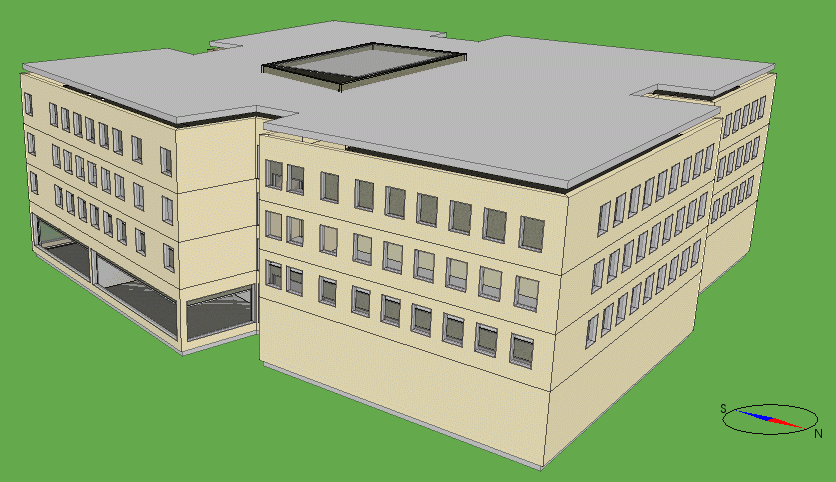
Figure 1. Whole building


02bFigure 2. Sensus air handling unit


02c

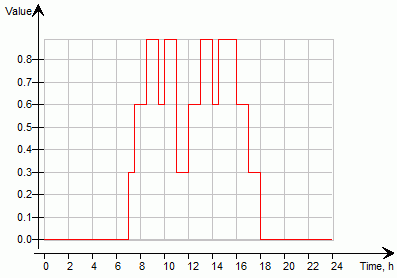
Figure 3. Detailed occupancy profile.


Print Email