equa-logo

Energy savings in hotel Retrofit


hotel 800
Project facts

Type: Hotel, code compliance, retrofitting
Consultant: EQUA
Summary: Retrofit of hotel, where Swedish building code had to be followed, meets tough requirements on energy efficiency.


Challenge

In Sweden the energy requirement for a building to be retrofitted is, in principle, the same as for a new project. The possibilities for energy efficient design is, however, limited compared to new building design. For example the space available for ventilation ducts may be smaller and as consequence more fan electricity must be used to distribute the same amount of air. Also the existing structure may prohibit appropriate envelope insulation and create increased transmission losses due to thermal bridging. In this hotel retrofit project the Swedish building code therefore put tough requirements on energy efficiency.


Solution and result

EQUA was engaged to model the project in IDA ICE. A base case model was developed based on the 3D-geometry from the architect’s drawings and the result was compared to the building code. Incrementally different energy saving measures was implemented until the model with some reasonable safety margin was below the requirement. Typically measures included improving envelope insulation, optimizing the window sizes and properties, adjusting air flow rates and schedules to the actual demand as well as wastewater recovery.


logo equa
 

Print Email

Slippery floor in floorball arena


Project facts

Type: Sport, retrofitting
Consultant: EQUA
Summary: Retrofitting of floorball hall prevents slippery floor.


Challenge

In an existing floorball hall, the players experienced humid and slippery floor mainly in the second half of a match, when the hall was crowded with both players and spectators. The hall is heated (at 18 °C) by high temperature ceiling gas radiators. This heating is set back to 10 °C when the hall is not in use. It was obvious that the problem occurred, because the floor reacted too slowly and stayed cold while the air was heated up. To the building physicist it was clear what to do, but there was an uncertainty how extensive the correction should be. Convincing arguments were needed. 

Solution

Some extra insulation on the floor will cause that the floor surface temperature reacts quicker during heat-up periods. Measurements were done during matches and a simple, but adequate, model of the hall was built.

Simplified geometry
Simplified geometry

For example, an accurate modelling of the geometry of the hall was not important, but it was important to position the radiator correctly and to separate the floor to different parts being closer and farther away from the radiator.

position of radiator

Correct position of the radiator and floor parts with different surface temperatures


With this model it was shown how results were changed after adding an insulation layer to the floor construction.

Result

The simulation showed that only 1-2 cm of insulation was needed to avoid the problem. It was also shown that too much of insulation could cause condensation problems at the ceiling, as the roof is only poorly insulated.

insulation result 800

Temperatures during two days (only the second with occupancy)
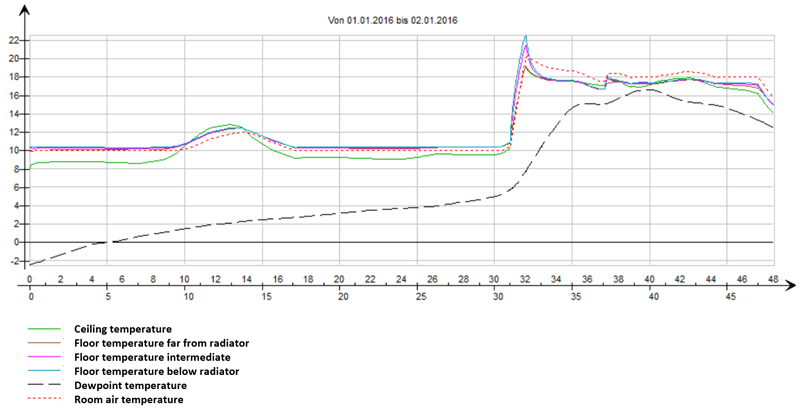
insulation 2cm 800

Same situation, but with 2 cm insulation on floor


logo equa


Print Email

Monitoring and verification of the office building - Hagaporten 3


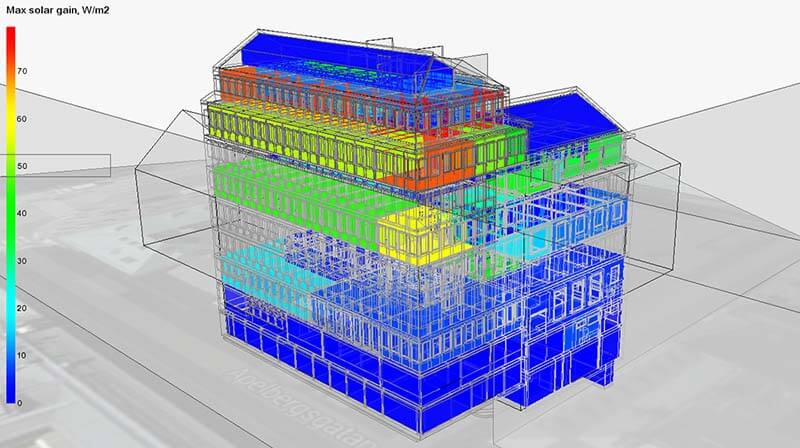
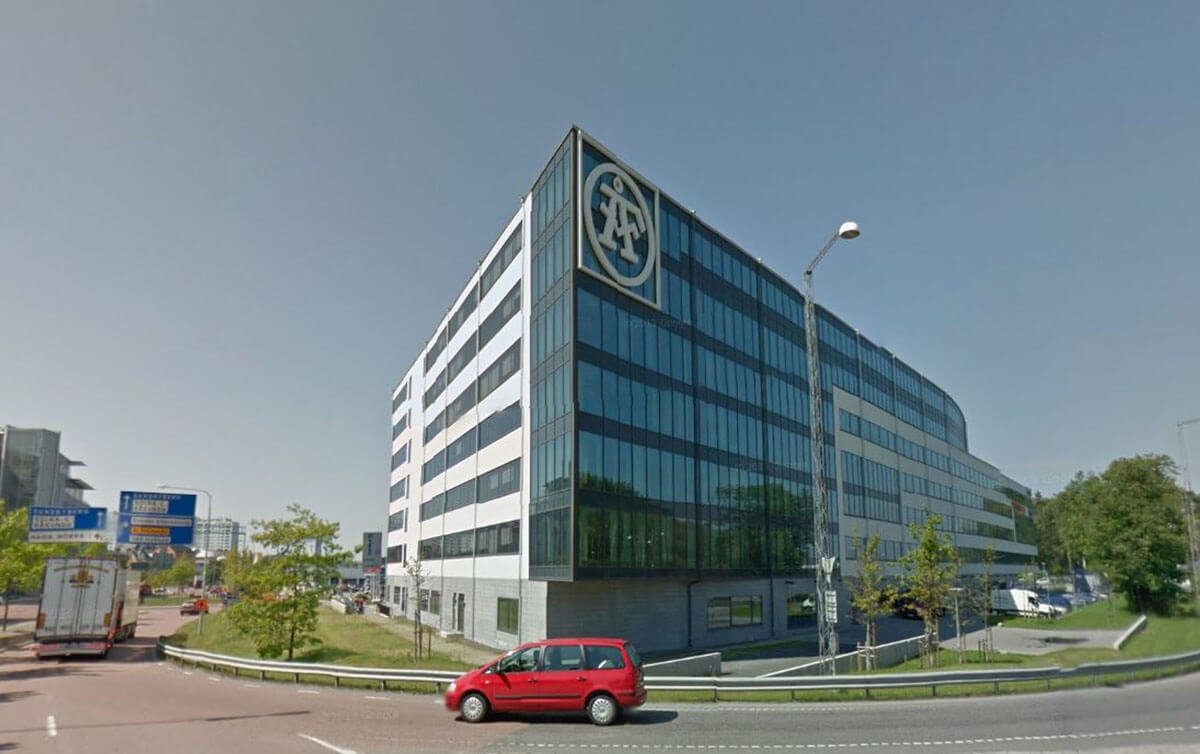
hagaporten 3 1200

Project Information:

Type: Office, detailed studies, labels and standards
Consultant: EQUA
Client: Skanska
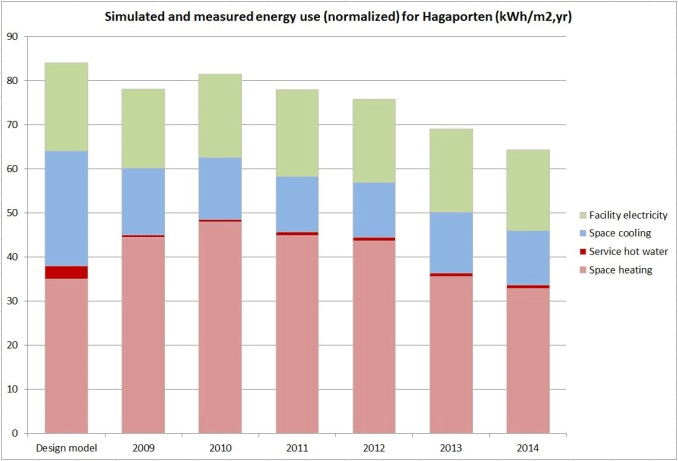
Summary: Certified EU Green Building office lowered energy use from approximately 100 kWh/m2 per year, to below 70 by monitoring and optimization.


Challenge

In 2006, a new outcome-based building code, using performance requirements on measured energy use, was introduced in Sweden. As a consequence, the interest in building simulation and monitoring and verification increased. The headquarters of the technical consulting company ÅF, Hagaporten 3, was designed and built in 2007/8. Hagaporten is almost 50,000 m2, including seven office floors and three garage floors. Skanska was the developer and later the building was sold to the real estate owner Norrporten. The requirement on measured energy performance was tightened up as Hagaporten was certified according to EU Green Building codes. The EU Green Building requirement is based on the national code and has in this case varied from 85 to 82 kWh/m2 per year. 

Solution

During the design of Hagaporten, an IDA ICE simulation model was used to verify that the energy use was lower than the EU Green Building requirements. The simulation model was also used as a reference during the measurement and verification period. To support the measurement and verification activities, high-resolution trending of all HVAC (Heating, Cooling and Ventilation) signals started as soon as the EMCS (Energy Management Control System) was up and running. The performance of the HVAC systems were analysed as soon as data was available. Energy reports with prediction of full year energy use based on short term data was produced on a regular basis. A group with people representing the developer, the building and control contractor, the operators, the commissioning consultant and an energy specialist were formed to support analysis, decision and implementation of tuning actions in the control system.
 

Result

Initially the weather-normalized energy use was around 100 kWh/m2 per year but after initial tuning it was decreased to less than 80 also leading to a better thermal comfort. The trend-data based optimisation work has continued and the energy use was less than 70 kWh/m2 per year for the years 2013 and 2014 (see figure). The lessons learnt in this project have been transferred to several other projects. The energy modeling skills have been improved for several individuals involved in the project.

air handling unit


logo equa Skanska SverigeAB
 

Print Email

Natural ventilation in an office building


natural ventilationProject facts

Type: Office, whole-building studies
Consultant: EQUA
Summary: Verification of a natural ventilation concept in a 60 000 m2 office building. Studies on air quality and a coupled comfort, energy and costs investigation was performed.


Challenge

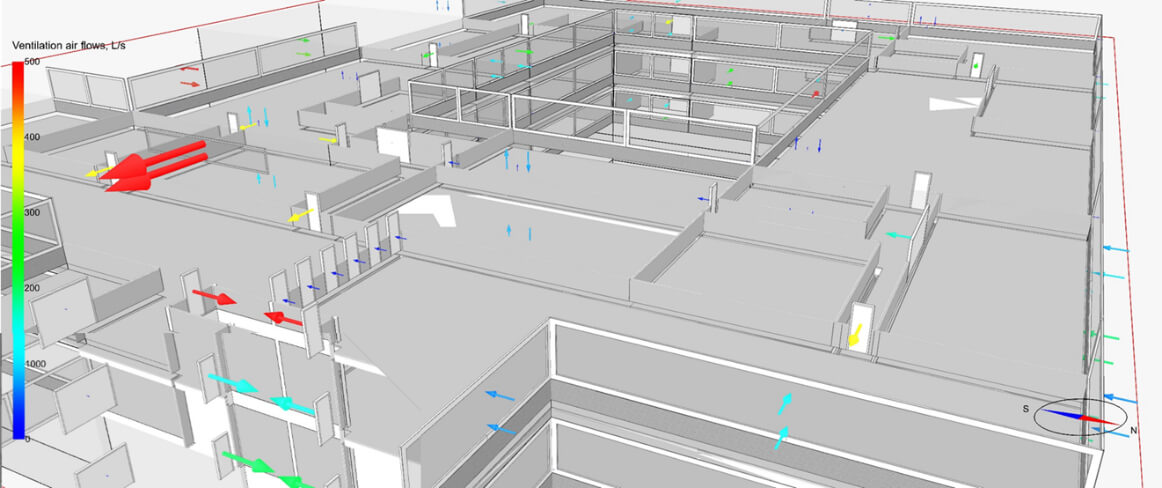
In a 60 000 m2 office building, the peripheral offices are supplied with fresh outdoor air through openable flaps. Exhausted air is released through a central well. This exhausted air can optionally be driven naturally or mechanically. The function of this concept is verified by checking the air rates for all offices as well as the duration of natural and mechanical exhausted ventilation. 

Solution

One ventilation sector of the building (app. 11 000 m2) was modelled with IDA ICE. The peripheral flaps as well as the central flap on the top of the well are modelled with controllable “large vertical opening” models. All other airflow resistances (office-corridor, corridor-well) are modelled with more simple “leak” models. The whole model contains 86 zones, 90 leaks and 105 large openings.

Typical peripheral 800
Typical peripheral office room with daily profile

Result

It was possible to show that the concept will work in principle, but needed some modification and calibration in the airflow path and its resistances as well as the control system. In addition to this, more detailed communication of expected air quality, as well as coupled comfort, energy and cost investigations was recommended.

natural ventilation result 1 natural ventilation result 2
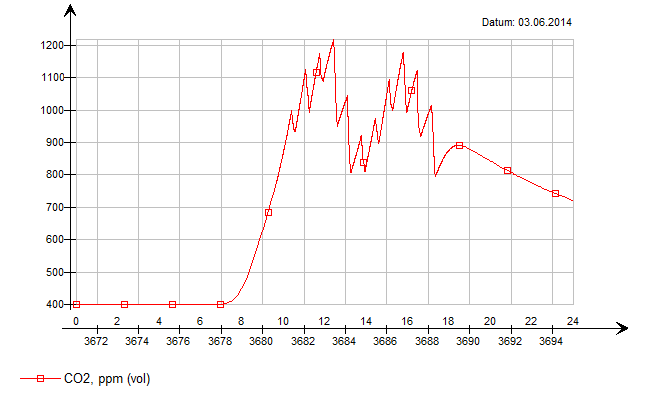
Whole year duration diagram of CO2

natural ventilation result 3

During an opening cycle of the peripheral flap: The air volume rate in the same zone varies due to the ventilation control of all other rooms of the same building sector.

natural ventilation result 4

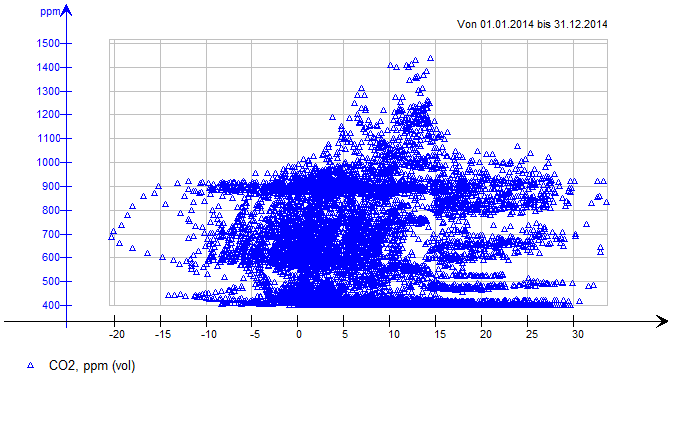
Hourly CO2 average depending on ambient air temperature. Natural ventilation rate decreases with increasing ambient air temperature. At 15°C, the central air exhausted is switched from natural to mechanical.


logo equa          
 

Print Email

Energy model of Mall of Scandinavia


0
Project facts

Type: Whole-building studies, code compliance, labels and standards
Consultant: EQUA
Client: PEAB
Summary: A 200 000 m2 shopping mall with over 1000 zones was simulated, using IFC and parallelization. Both optimization and sizing was achieved, as well verifying the energy use for the Swedish building code and the BREEAM energy credit.


Challenge

Mall of Scandinavia is the largest mall in Sweden with around 200 000 m2 of shopping area and an additional 100 000 m2 of indoor parking garage. The construction project was finished just before Christmas 2015 and is certified under the BREEAM system. It was a challenge to build the energy model needed to verify the national building energy code as well as the energy credit in the BREEAM-system due to its large number of zones and input. The shops are supplied by a temperature controlled VAV-system. The air is transferred to the mall concourse were exhausted. 

Solution

The model was generated from an IFC-model designed by the architect. The zoning is automated by IDA ICE based on the spaces in the IFC-model. Zone templates containing heating and cooling set-points, heat loads, schedules, air-flow rates and flow type control were prepared by the HVAC-designer and were automatically mapped to the typical zones.

layers

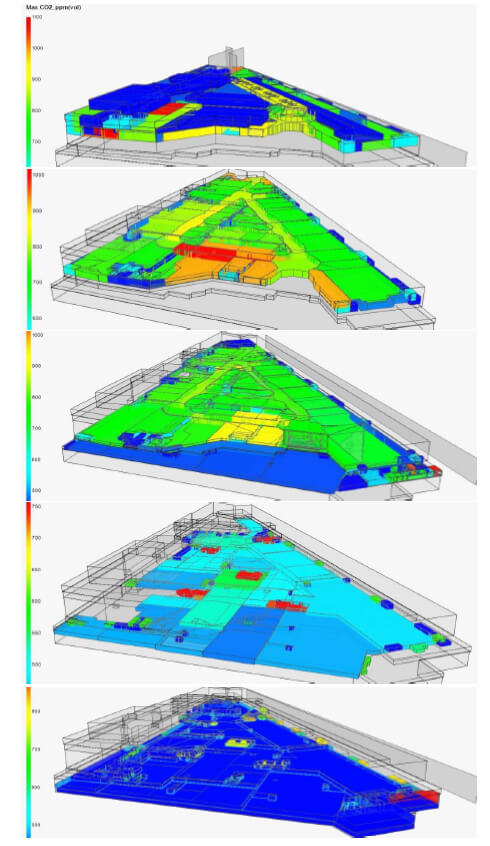
The concept of decoupling was applied; one parent model containing the central HVAC-systems and five child models containing one or two storeys and their zones. Each child model was run on a separate processor to increase simulation speed. To achieve balanced air flow in the VAV-system the exhaust air from the mall concourse was modelled as a pressure-controlled system with leaks between the shops and the concourse.


Result

The model was used to test different approaches to recover heat from the return air, to size the cooling equipment and to verify the energy use for the building code as well as the BREEAM energy credit. The model had over 1000 zones and took a few hours to run. The modelling of the temperature and pressure controlled VAV-system worked as intended.


logo equa     peab     
 

Print Email